Directing
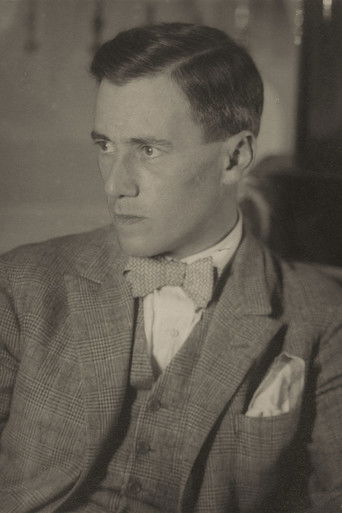
Hans Richter
Richter's first contacts with modern art were in 1912 through the "Blaue Reiter" and in 1913 through the "Erster Deutscher Herbstsalon" gallery "Der Strum", in Berlin. In 1914 he was influenced by cubism. He contributed to the periodical Die Aktion in Berlin. His first exhibition was in Munich in 1916, and Die Aktion published as a special edition about him. In the same year he was wounded and discharged from the army and went to Zürich and joined the Dada movement. Richter believed that the artist's duty was to be actively political, opposing war and supporting the revolution. His first abstract works were made in 1917. In 1918, he befriended Viking Eggeling, and the two experimented together with film. Richter was co-founder, in 1919, of the Association of Revolutionary Artists at Zürich. In the same year he created his first Prélude (an orchestration of a theme developed in eleven drawings). In 1920 he was a member of the November group in Berlin and contributed to the Dutch periodical De Stijl. Throughout his career, he claimed that his 1921 film, Rhythmus 21, was the first abstract film ever created. This claim is not true: he was preceded by the Italian Futurist Bruno Corra and Arnaldo Ginna between 1911 and 1912 (as they report in the Futurist Manifesto of Cinema), as well as by fellow German artist Walter Ruttmann who produced Lichtspiel Opus 1 in 1920. Nevertheless, Richter's film Rhythmus 21 is considered an important early abstract film. Richter moved from Switzerland to the United States in 1940 and became an American citizen. He taught in the Institute of Film Techniques at the City College of New York. While living in New York City, Richter directed two feature films, Dreams That Money Can Buy (1947) and 8 x 8: A Chess Sonata in 8 Movements (1957) in collaboration with Max Ernst, Jean Cocteau, Paul Bowles, Fernand Léger, Alexander Calder, Marcel Duchamp, and others, which was partially filmed on the lawn of his summer house in Southbury, Connecticut. In 1957, he finished a film entitled Dadascope with original poems and prose spoken by their creators. After 1958, Richter spent parts of the year in Ascona and Connecticut and returned to painting. In 1963, he directed the short film "From the Circus to the Moon" on the American artist Alexander Calder. Richter died in Minusio, Switzerland in 1976.
Ask which Hans Richter to watchBest known for
Ghosts Before Breakfast
Rhythm 21
Film Study
Diaries, Notes, and Sketches
Two Pence Magic
Rhythm 23
Dreams That Money Can Buy
Everything Turns, Everything Revolves
8 x 8: A Chess-Sonata in 8 Movements
Inflation
Free Radicals: A History of Experimental Film
Every Day
He Stands in a Desert Counting the Seconds of His Life
Race Symphony
Dadascope
The Challenge... A Tribute to Modern Art
Germany Dada
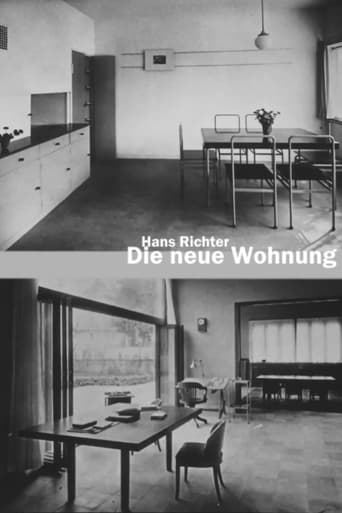
The New Apartment
Movies (36)
Ghosts Before Breakfast
Rhythm 21
Film Study
Diaries, Notes, and Sketches
Two Pence Magic
Rhythm 23
Dreams That Money Can Buy
Everything Turns, Everything Revolves
8 x 8: A Chess-Sonata in 8 Movements
Inflation
Free Radicals: A History of Experimental Film
Every Day
He Stands in a Desert Counting the Seconds of His Life
Race Symphony
Dadascope
The Challenge... A Tribute to Modern Art
Germany Dada
The New Apartment
Dada
Ich lebe in der Gegenwart - Versuch über Hans Richter
Index – Hans Richter
The New Apartment (Richter Studio Version)
Europa Radio
Metall
The Champion of Pontresina
Mädels von heute
Hallo Everybody
From Thunderbolt to Television Screen
A Visit To Hans Richter
Passionate Pastime
Die Husaren kommen
Neues Leben
From the Circus to the Moon
The Stock Exchange as a Barometer of the Economic Situation
Hans Richter Early Works
The Birth of Color